 feisty
Michelle Bridges and menopause might not be the pairing you'd search for first, but it's one that keeps coming up. The fitness trainer, author, and former The Biggest Loser Australia coach has spoken publicly about her own experience of midlife hormonal change, and given the size of her audience, what she says carries weight. Some of it aligns closely with the clinical evidence. Some of it reflects the gaps that still exist in how the fitness industry talks to women over 40.
What Michelle Bridges has said about midlife health
Bridges has spoken in interviews about noticing changes to her body composition, recovery, and energy levels as she moved through her mid-40s. She's been candid about the fact that the training approach that worked for her in her 30s needed to change. That's not a small concession from someone whose brand was built on intensity. It's also exactly what the physiology says happens: falling oestrogen during perimenopause shifts how muscle is built, how fat is stored, and how well the body tolerates repeated high-intensity effort.
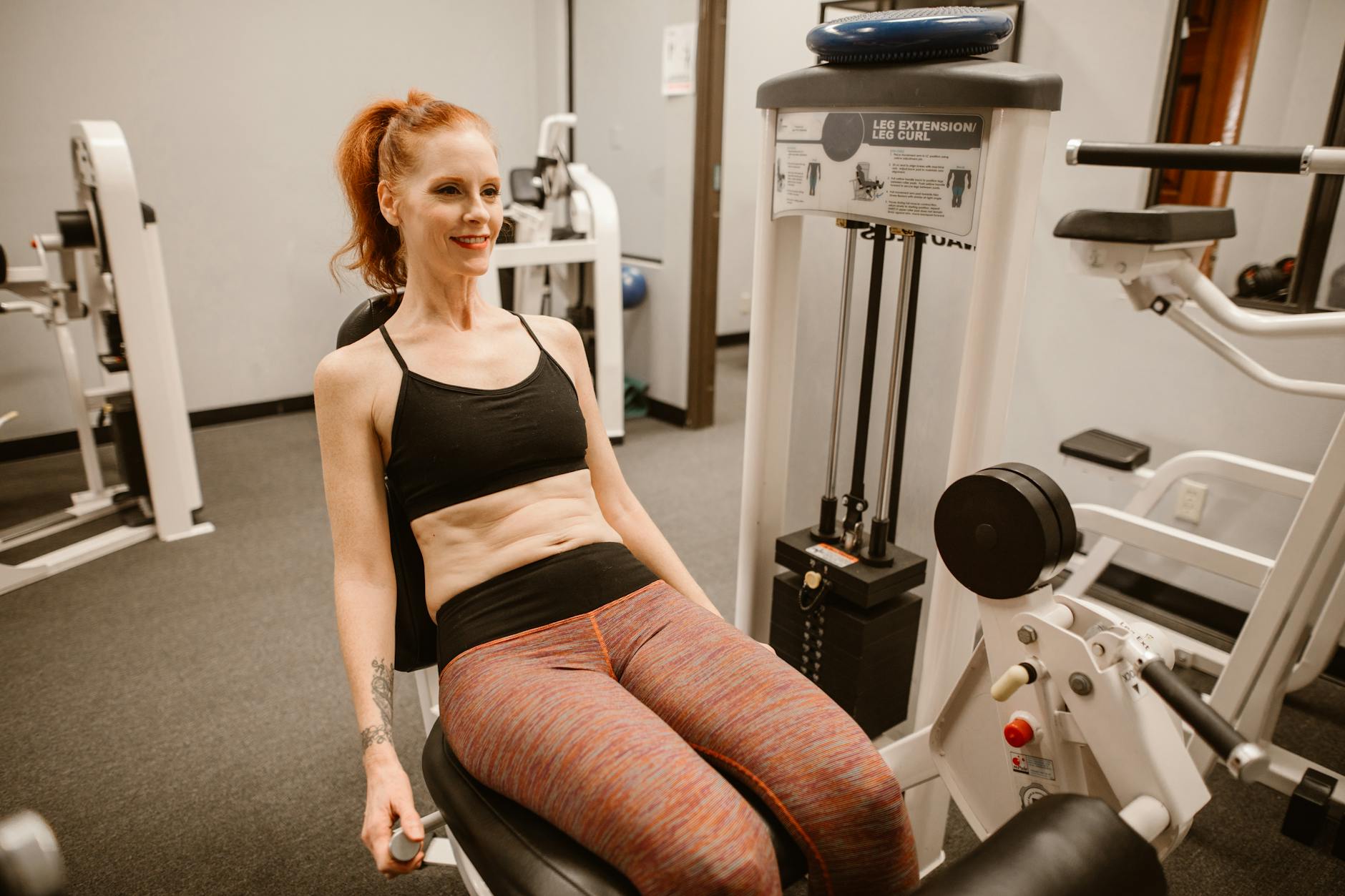
She has referenced the importance of strength training in midlife, which is well-supported by research. Resistance training preserves lean mass, supports bone density, and improves insulin sensitivity at a time when all three are under hormonal pressure. That's worth amplifying, and Bridges has platform enough to do it.
Where the fitness industry falls short on menopause
The broader fitness world, including many trainers with Bridges' level of reach, still tends to frame menopause primarily as a weight management challenge. That's not wrong, exactly. Visceral fat accumulation during perimenopause is a real metabolic concern, and visceral fat is harder to shift after 40 for well-documented hormonal reasons. But reducing the menopause conversation to calorie control and exercise frequency misses a lot.
Symptoms like brain fog, sleep disruption, joint pain, mood changes, and hot flushes don't respond to harder training. Some of them get worse with training that's too aggressive for a depleted system. What actually helps often involves a combination of hormone therapy, sleep prioritisation, and strategic strength work. Not just effort.
Strength training, protein, and what the evidence actually supports
If Bridges has one consistent message that the science backs up, it's that women in midlife need to lift. Not the light weights and high-rep approach that most women were told for decades, but genuine resistance training with progressive overload. Muscle mass loss accelerates after menopause at a rate that cardio alone doesn't address.
Protein intake matters too. The recommended protein target for women over 40 engaged in regular training sits meaningfully higher than general population guidelines: closer to 1.6 to 2.0 grams per kilogram of body weight per day. Many women are nowhere near that. Bridges has pushed protein-forward eating in her programs, and in this context it's one of the more evidence-aligned things the fitness industry tells menopausal women.
Creatine is another area where the research has caught up with gym culture, and creatine and menopause is a pairing the science is now taking seriously, particularly for muscle retention and cognitive function.
What Bridges hasn't said publicly, and what that gap costs
To the extent that it's visible in her public output, Bridges hasn't made hormone therapy a prominent part of her menopause conversation. That's not unusual for fitness-focused communicators, but it's a gap that matters. Menopausal hormone therapy (MHT) is the most effective intervention for the vasomotor symptoms that derail sleep, mood, and training capacity. Exercise is not a substitute for it. For women whose symptoms are significantly disrupting their lives, the absence of MHT from the conversation leaves them under-informed.
Knowing what menopause treatment in Australia covers is a step most women should take alongside any fitness-based approach to midlife health. A good GP or menopause specialist can assess whether hormone therapy is appropriate. A trainer, however well-credentialed, can't do that assessment.
Why public figures talking about menopause still matters
Destigmatisation is real work. When a high-profile Australian woman says publicly that her body changed in midlife and she had to adapt, that normalises something millions of women experience in silence. Bridges has built her career on the idea that women can do hard things with their bodies. Applying that framework to menopause, rather than pretending it's something to push through or ignore, is useful.
The more precise the conversation gets, the more useful it becomes. Hot flushes are not a motivation problem. Bone density loss is not fixed by HIIT. Sleep disruption driven by oestrogen withdrawal is not solved by going to bed earlier. These distinctions matter, and they're the ones the fitness industry needs to make more clearly.
What to actually do with this information
If you've been following Bridges or someone like her for health guidance in midlife, the strength training message is a keeper. So is the protein emphasis. But take those as the foundation of a broader plan, not the whole plan.
See a GP who is current on menopause evidence. Ask specifically about hormone therapy and whether it's appropriate for you. Use the fitness work to support bone density, muscle mass, mood, and cardiovascular health. Don't expect it to manage every symptom. And be appropriately sceptical of any fitness product or program that positions itself as a menopause treatment. Exercise is medicine in midlife. It's not a prescription for everything menopause brings.