 feisty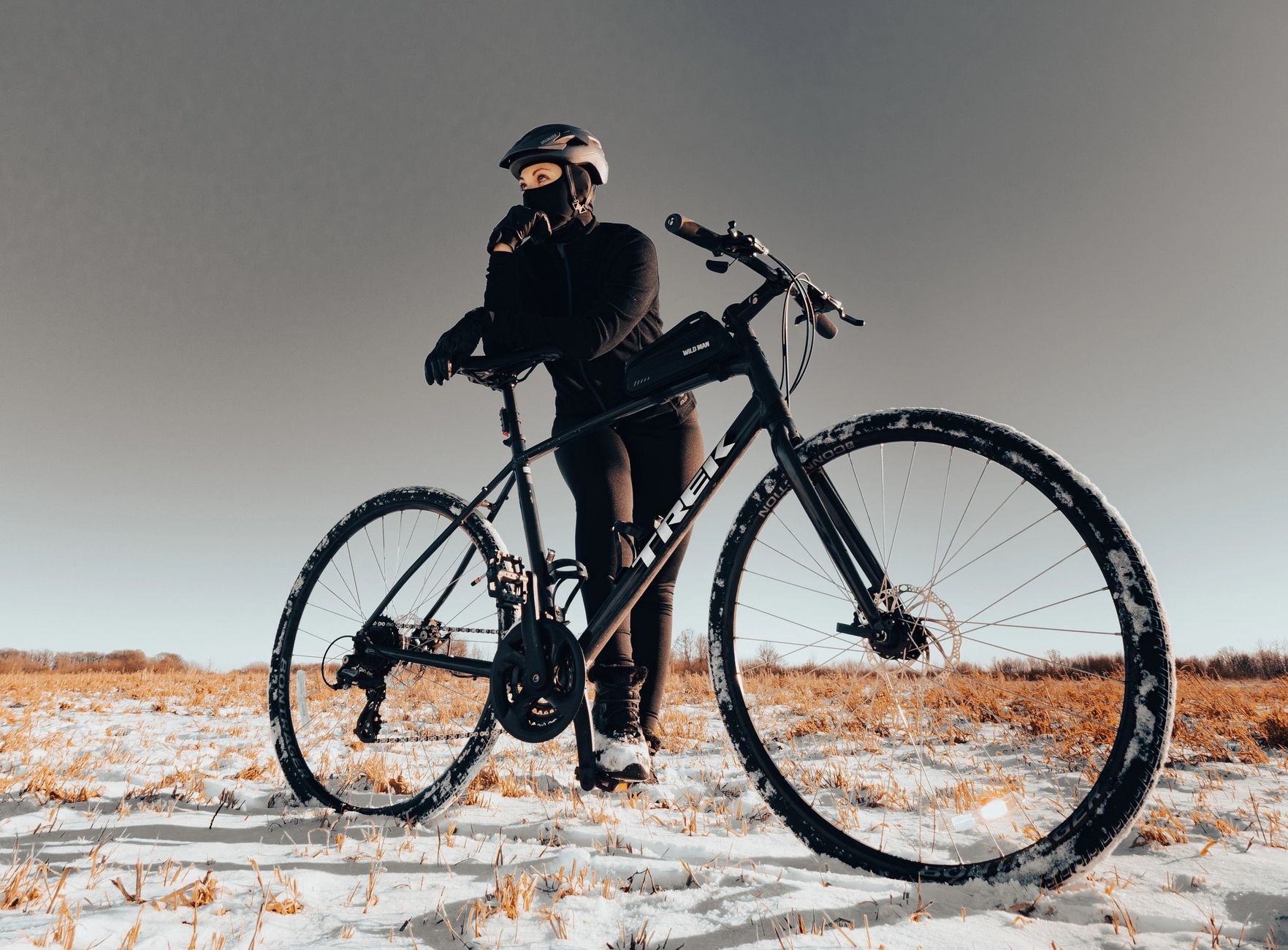
Winter training for cyclists gets a bad reputation. Cold mornings, shortened daylight, wet roads, and the general pull of a warm couch make it easy to drift into full hibernation mode from November through March. But the riders who show up to spring base miles already strong didn't spend winter watching race highlights. They used the off-season deliberately, and the gap between them and everyone else shows up by June.
Why winter matters more than most cyclists think
The off-season is where aerobic capacity gets built quietly. There's no race pressure, no taper stress, no peaking to manage. That freedom is the point. Winter gives you a window to work on the systems that racing season never quite lets you touch: deep aerobic base, muscular strength, and movement quality. Miss that window and you spend the first half of summer just getting back to where you were.
It's also worth being honest about what "staying fit" through winter actually requires. Riding three times a week at low intensity keeps you from losing everything, but it doesn't make you faster. Faster comes from structured work: zone 2 volume, a weekly strength session, and occasional higher-intensity efforts to keep the neuromuscular system sharp.
Indoor riding: getting the most out of a trainer
Smart trainers have changed winter for cyclists in a real way. Platforms like Zwift turn what used to be a soul-crushing hour on a static trainer into structured, interactive riding with real pacing data. That matters because the biggest indoor riding problem isn't motivation at the start of a session. It's pacing. Without wind resistance and terrain feedback, most cyclists either ride too hard or too easy, both of which undercut the training effect.
For zone 2 work indoors, aim for a perceived effort where you can hold a full conversation but wouldn't want to go much longer than 90 minutes. Heart rate between roughly 60 and 75 percent of your maximum is a reasonable proxy. For higher-intensity sessions, sweet spot intervals (around 88 to 93 percent of functional threshold power) build fitness efficiently without digging a hole that takes days to crawl out of.
Keep indoor sessions purposeful. Two focused 60-minute sessions beat three aimless ones. Structure beats volume when the volume isn't there.
Strength training: the piece cyclists consistently skip
Off-season is the right time to lift. Not because in-season lifting is impossible, but because the fatigue from heavy strength work conflicts with high-quality riding. Winter removes that conflict. Two strength sessions per week, focused on unilateral leg work, hip stability, and posterior chain development, addresses the imbalances that cycling creates.
Single-leg Romanian deadlifts, Bulgarian split squats, and hip thrusts do more for a cyclist than leg press and quad extensions. Cycling is a powerful hip flexor and quad-dominant sport. Strength work that loads the glutes and hamstrings corrects that imbalance and reduces knee injury risk.
Core work matters too, though not the way most people approach it. A plank is fine. But anti-rotation work, pallof presses, and single-arm carries train the stability that actually holds your position on the bike when fatigue sets in at hour four.
If you're navigating any hormonal changes alongside your training, it's worth reading about muscle-making ingredients menopausal women actually need, since protein timing and specific nutritional support can significantly shift how well your strength sessions convert to actual muscle.
Outdoor riding in winter: it's not always terrible
Cold weather riding gets worse press than it deserves. With the right kit, riding outdoors in winter is genuinely enjoyable, and the varied terrain and real-world conditions do things an indoor trainer can't replicate. Handling skills, pacing judgment on hills, and the mental grit of riding in discomfort all improve with outdoor time.
The practical threshold for most cyclists is around 3 to 5 degrees Celsius. Below that, roads ice unpredictably and the risk-to-reward ratio shifts. Above it, layering solves most problems. Merino wool base layers, a wind-resistant shell, and waterproof gloves cover about 80 percent of winter riding conditions. Overshoes matter more than most cyclists expect; cold feet end rides early.
Keep outdoor winter rides at lower intensity. The cold makes high-intensity efforts harder to control and easier to botch. Save the structured intervals for indoors where conditions are consistent.
Planning the winter block: a simple framework
The simplest approach to winter training structure is to think in three phases. The first four to six weeks focus on rebuilding aerobic base and introducing strength work. The middle block, roughly eight to ten weeks, adds volume to both cycling and lifting as adaptation sets in. The final four weeks before spring base training begins introduce short, high-intensity efforts to wake up the fast-twitch system without creating fatigue heading into the race build.
That framework works whether you're training for a gran fondo, a gravel race, or a triathlon. If triathlon is on your agenda, the multi-sport demands make structured winter planning even more important. The triathlon training fundamentals perspective applies directly: winter is where you build the engine, not the race-specific fitness.
Don't skip rest weeks. Every third or fourth week should drop volume by 30 to 40 percent to allow adaptation. The fitness doesn't come from the hard weeks alone. It comes from absorbing them.
Nutrition through the off-season
Cyclists often under-eat in winter because the rides feel easier and shorter. That's a mistake during a block that includes regular strength work. Protein needs stay high (1.6 to 2.0 grams per kilogram of body weight per day) to support muscle repair and adaptation from lifting. Carbohydrates should scale with actual training load rather than being cut across the board.
One genuine off-season nutrition pitfall is dramatically reducing intake while maintaining or increasing strength training. The body reads that as a signal to conserve rather than build. Eating enough to support the work isn't a compromise on body composition goals. It's what makes the spring version of you faster.
Showing up to spring ready
The cyclists who get the most from winter training share one habit: they treat the off-season like a training phase, not a break. That doesn't mean grinding through December with race-season intensity. It means showing up consistently, lifting twice a week, riding with purpose three to four times a week, and sleeping enough to let the adaptation happen. Spring fitness isn't built in March. It's built in the quiet months before it.