 feisty
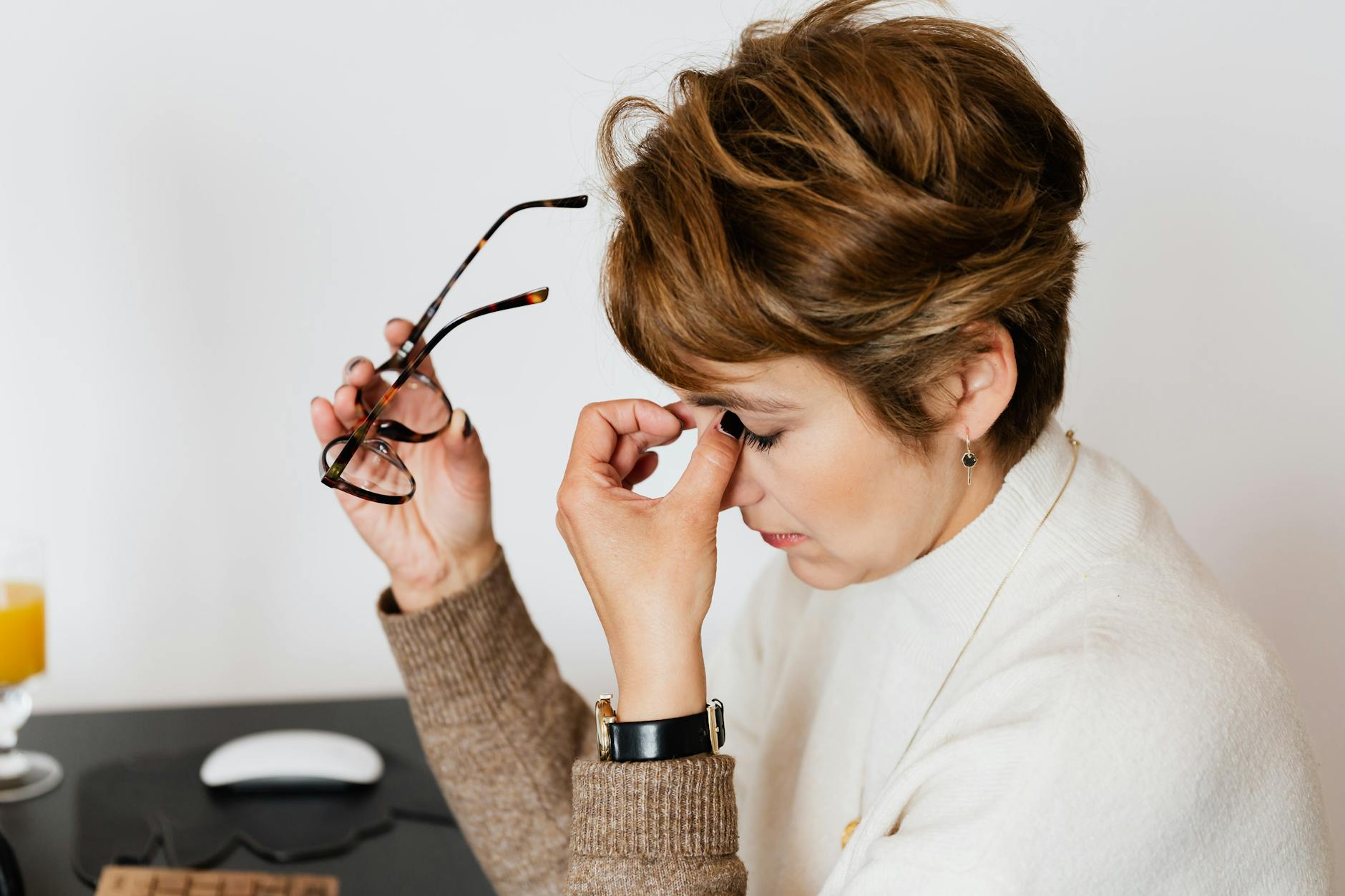
If you've spent any time in menopause forums or wellness circles recently, you've probably seen the phrase "cortisol poisoning." It's being used to explain everything from belly fat to brain fog to bone-deep exhaustion. The term isn't a clinical diagnosis, but the underlying biology it points to is real. During menopause, cortisol doesn't just stay put. It shifts, spikes, and stops responding the way it used to, and for many women that change is dramatic enough to feel like a system failure.
What "cortisol poisoning" actually means
The phrase is not in any medical textbook. Clinicians use terms like hypercortisolism or cortisol dysregulation instead. But the wellness shorthand has caught on because it captures something women recognise: a state where the stress hormone cortisol seems to be running the show at the worst possible time.
Cortisol is produced by the adrenal glands and follows a daily rhythm, peaking in the morning and tapering off by evening. It regulates blood sugar, immune function, sleep, and the body's response to stress. None of that is a problem in isolation. The problem in menopause is that oestrogen normally helps buffer the cortisol response. When oestrogen drops, that buffer disappears. The stress system becomes more reactive, slower to recover, and harder to regulate.
The result isn't necessarily more cortisol on a blood test, though that can happen. It's a cortisol system that's less predictable and more damaging in its effects. That's what people mean when they say "cortisol poisoning," and it's a real physiological state even if the name is informal.
Why menopause makes it worse
Oestrogen and cortisol have a direct relationship. Oestrogen receptors sit on the same brain regions that regulate the HPA axis (the hypothalamic-pituitary-adrenal axis), which is the control system for cortisol. When oestrogen is withdrawn, the HPA axis loses a key regulator. Stress signals that once produced a measured cortisol response can now trigger a bigger, longer spike.
There's also a compounding problem with sleep. Poor sleep raises cortisol. Elevated cortisol disrupts sleep. Menopause already wrecks sleep through night sweats and wakefulness. So the cycle runs hard: hot flushes disturb sleep, sleep deprivation elevates cortisol the next day, high cortisol makes the next night's sleep worse.
Add in the psychological stressors that often arrive at midlife (career peaks, ageing parents, teenagers, relationship shifts) and you have a cortisol system that's both physiologically compromised and socially overwhelmed. This is the context behind the "poisoning" language. It's not dramatic. It's accurate.
Our earlier piece on cortisol and menopause: why stress hits harder now goes deeper into the HPA axis mechanics if you want the full biological picture.
What elevated cortisol actually does to your body
Chronically elevated or dysregulated cortisol has real consequences. These aren't subtle.
- Belly fat accumulation. Cortisol signals the body to store fat around the abdomen. This is why menopausal women often notice weight shifting to the midsection even without major changes to diet or activity.
- Muscle breakdown. Cortisol is catabolic, meaning it breaks down tissue for energy. Over time, high cortisol erodes the muscle mass that women already struggle to maintain after oestrogen loss.
- Bone density loss. Cortisol suppresses bone formation and promotes bone resorption. In a body already losing bone protection from oestrogen, this is a significant double hit.
- Immune suppression and chronic inflammation. Short-term cortisol spikes are anti-inflammatory. But chronic elevation reverses that, contributing to the low-grade systemic inflammation that drives joint pain, fatigue, and metabolic disruption.
- Brain fog and memory issues. The hippocampus, which handles memory and learning, is highly sensitive to cortisol. Prolonged elevation shrinks hippocampal volume, which is why sustained stress genuinely impairs recall and concentration.
How to test for it (and why tests are often misleading)
A standard cortisol blood test taken at a single point in time tells you very little. Cortisol varies by hour, day, season, and what happened in the 30 minutes before your blood draw. A morning sample might look fine while the evening pattern is completely disrupted.
More informative options include a 24-hour urinary free cortisol test, or a diurnal salivary cortisol panel that samples cortisol at 4 to 6 points across the day. The salivary panel is particularly useful for identifying a flat cortisol curve (where the morning peak doesn't materialise) or an elevated evening cortisol (where the system fails to wind down). Both patterns are common in perimenopause and post-menopause and both cause distinct symptom profiles.
If you're seeing a GP or specialist, ask specifically for a diurnal salivary cortisol panel rather than a one-off blood test. A menopause specialist will understand what you're looking for.
What actually helps
There is no supplement that "fixes" cortisol in the way that phrase implies. Anyone selling a cortisol-blocking pill is selling wishful thinking. What the evidence does support is a set of consistent inputs that bring the stress system back toward regulation over weeks and months.
Sleep protection comes first. Not sleep hygiene tips, but aggressive sleep protection: consistent bed and wake times, a dark cool room, no alcohol within 3 hours of bed, and active management of night sweats with appropriate cooling measures or, where suitable, hormone therapy. A body that sleeps well produces less cortisol the next day. Full stop.
Resistance training is one of the most effective cortisol regulators available. It improves insulin sensitivity, builds the muscle mass cortisol erodes, and improves the body's stress response over time. The dose matters: 2 to 3 sessions per week of genuine resistance work, not light band exercises.
High-intensity exercise done at the wrong time makes things worse. Intense cardio late in the day spikes cortisol at exactly the time you need it falling. If you're dealing with significant cortisol dysregulation, shift intense sessions to the morning and use walking, yoga, or mobility work in the afternoon and evening.
Phosphatidylserine has the most evidence behind it of any supplement in this category. Several small trials found it blunts the cortisol spike triggered by exercise and acute stress. It doesn't suppress cortisol entirely, which you wouldn't want. It reduces the over-reaction. Typical studied doses are 400–800 mg per day.
Cognitive behavioural therapy has a surprisingly strong evidence base for stress-related symptoms in menopause. It changes the appraisal pattern that triggers the cortisol spike in the first place. Our article on CBT for menopause covers what the clinical research actually shows across 7 specific symptom areas, including sleep and anxiety.
Hormone therapy addresses the underlying oestrogen deficiency that destabilises the stress response. For many women, restoring oestrogen levels doesn't just relieve hot flushes. It measurably improves HPA axis regulation. That's a conversation worth having with a menopause-informed clinician if you haven't already.
When to take it seriously
Most women dealing with stress symptoms in menopause don't have Cushing's syndrome or a diagnosable cortisol disorder. What they have is a stress system that's been pushed past its capacity by a combination of hormonal shift, poor sleep, and real life. That's not a reason to dismiss it. It's a reason to treat it systematically.
If your fatigue is profound and doesn't respond to sleep improvements, if your belly fat is growing rapidly despite no dietary change, or if you're experiencing significant mood instability alongside physical symptoms, push for the diurnal cortisol test and a specialist referral. Cortisol dysregulation in menopause is under-recognised and under-treated, not because the science isn't there, but because most appointments aren't long enough for a clinician to piece together the full picture.
The wellness industry's "cortisol poisoning" language is imprecise, but it's pointing at something that genuinely matters. Take the biology seriously, be sceptical of the product marketing that uses it as a hook, and build the basics before spending money on anything in a bottle.